The HP TouchPad, Or, HP Shows How To Ruin A Good Thing
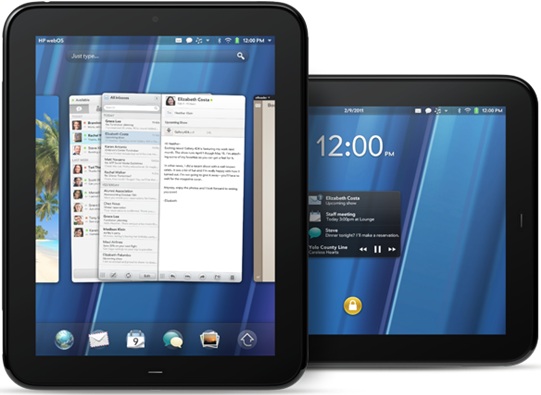 So HP has finally released their first major device based on webOS — the cool mobile operating system they acquired when they bought Palm, Inc. It’s called the HP TouchPad. And by all accounts, it kind of sucks.
Well, sucks may be a little too harsh. It isn’t that it sucks, really; it’s that it doesn’t stand out in any significant way when set alongside its primary competition, Apple’s iPad. And since the iPad and the TouchPad both cost about the same, and Apple indisputably has the larger application ecosystem, there doesn’t seem to be any reason why anyone would actually buy a TouchPad.
Which makes me sad. I bought the original webOS device, the Palm Pre, back in 2009; partly because I needed a new phone, having dropped my last one into the Shenandoah River the weekend before, but partly because I had heard a lot of good things about the Pre being a particularly easy-to-use and developer-friendly device, and I wanted to try it for myself.
It turned out that most of those good things I’d heard were true, mostly because of webOS, which surprised me with how compelling a system it turned out to be. Unfortunately, there were also a fair share of annoying things as well, mostly due to the original Pre’s hardware being of mediocre quality at best. I still have my Pre, and use it every day happy with my purchase, but I could understand why others chose to go for iPhones or Android devices instead.
That mediocre hardware was a sign of things to come; Palm had pinned their hopes for survival on the success of the Pre, but it never really caught on — the hardware was one reason why, along with poor developer relations and lousy marketing — and so Palm floundered for a while before being bought by HP last year.
When that acquisition was made, it seemed like it had some real potential. Palm may not have been able to make solid hardware, but HP has a good reputation in that line, and HP has the budget to do real marketing that Palm never did. So, the thinking went, maybe Palm going under would end up being a Good Thing for webOS, if the result was a wider range of more reliable devices running it.
Well, we’re now a year out from HP’s acquisition of Palm, and it’s pretty clear now that this thinking was deeply mistaken. Jean-Louis Gassée has a good run-down of HP’s baffling decisions about how to manage webOS as an asset since the acquisition, but they all boil down to basically the same thing: HP, to be blunt, seems to have no idea what it wants to do with webOS. Which is essentially suicide, since developers — who are already going to be deeply skeptical of betting their futures on a platform with marginal market share — aren’t going to touch a platform with a ten-foot pole if the platform vendor seemingly can’t get their act together even far enough to decide whether their platform belongs on tablets, phones, or printers (!).
Beyond bad leadership, though, HP has also failed on execution. There was a lot of new interest in webOS when HP bought Palm; people were genuinely curious to see what HP would do with its new toy. Rather than capitalize on that attention by laying out a vision for its place in the mobile world, though, HP proceeded to say absolutely nothing (except for occasional mentions by HP CEO Leo Apotheker, which frequently contradicted each other) for ten months — and then, when they did say something, it was only that they wouldn’t have any webOS products on offer until four or five months later.
That just doesn’t cut it. In the mobile world, where there’s a major new Android device coming out every month, that’s too slow to be competitive. By the time the first HP-branded webOS product (the HP Veer) made it out the door, the devices it was competing against were leaps and bounds ahead of it. The TouchPad seems to have similarly suffered from its even lengthier gestation; it looks a lot more compelling when compared to the original iPad than it does against the iPad 2.
webOS is beginning to feel like a classic geek tragedy; a brilliant product, doomed to obscurity by poor management, first at a cash-strapped underdog and then at a global behemoth. Even the team that created it has been dismantled; design lead Matias Duarte went to Google to work on Android, and Rich Dellinger, who designed webOS’ cleverly unobtrusive notification system, got snapped up by Apple. So while the good thinking that made webOS so interesting will likely prove to be quite influential in mobile software design, it’s unlikely that it will do so as part of webOS.
Indeed, if webOS feels like anything today, it feels like Commodore’s groundbreaking AmigaOS — another product that managed to inspire a generation of software developers while simultaneously failing to make any kind of dent in the marketplace. I don’t know how HP shareholders feel about the idea of their money going to make HP the 21st-century version of Commodore. But if I was one of them, I wouldn’t be too happy about it.

 A web feed for this site is available,